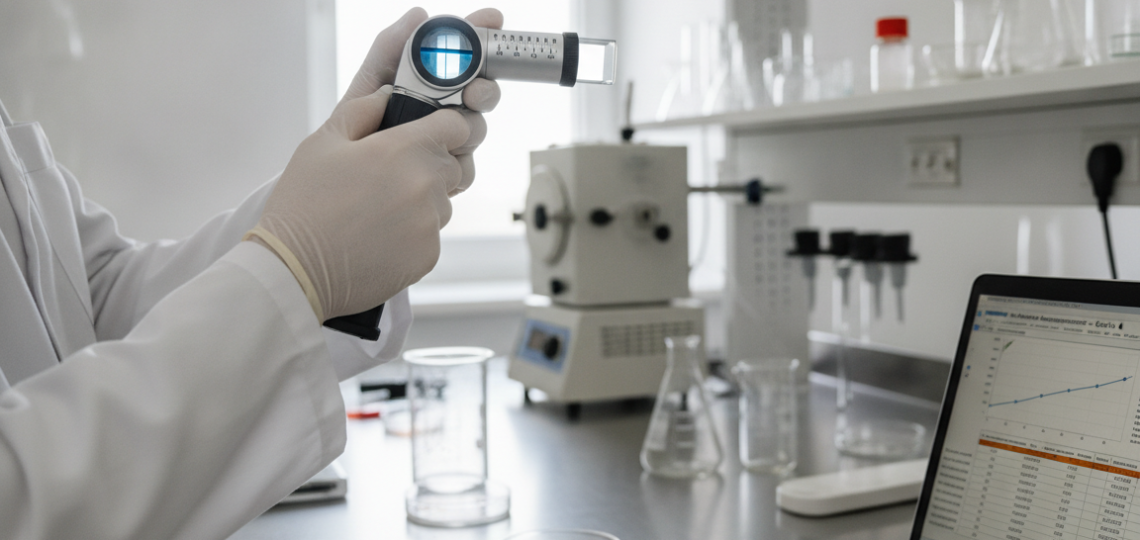
WINE REFRACTOMETER
A one-degree temperature error can noticeably change a Brix reading, which may cost a craft brewery hundreds of dollars per batch. This shows why homebrewers, winemakers, coffee roasters, and lab teams need to understand refractometers properly.
Buy Refractometer
This concise guide explains the fundamentals of refractometers, their function, and their practical use. It provides clear instructions for handheld and digital units, along with buying guidance for different applications. It also explains where to buy refractometers, including from trusted suppliers like Installation Parts Supply (InstallationPartsSupply.com), a factory distributor and industrial supplier supporting the beverage industry and OEMS for over twenty years.
It gives quick guidance on taking Brix and Specific Gravity readings, checking calibration, and understanding temperature compensation and correct sample handling. Whether you use a field-ready model or a digital benchtop unit, this section helps you take accurate and repeatable measurements with confidence.
Main Takeaways
- Even small temperature shifts can change Brix results, making temperature control important.
- A refractometer can support brewing, winemaking, honey testing, and salinity measurement.
- Different refractometer types suit different jobs, so choose one that matches your use case.
- Consider a best digital refractometer if you need fast, logged results and integration.
- Buying a refractometer from reputable suppliers like Installation Parts Supply helps ensure access to commercial-grade parts and support.
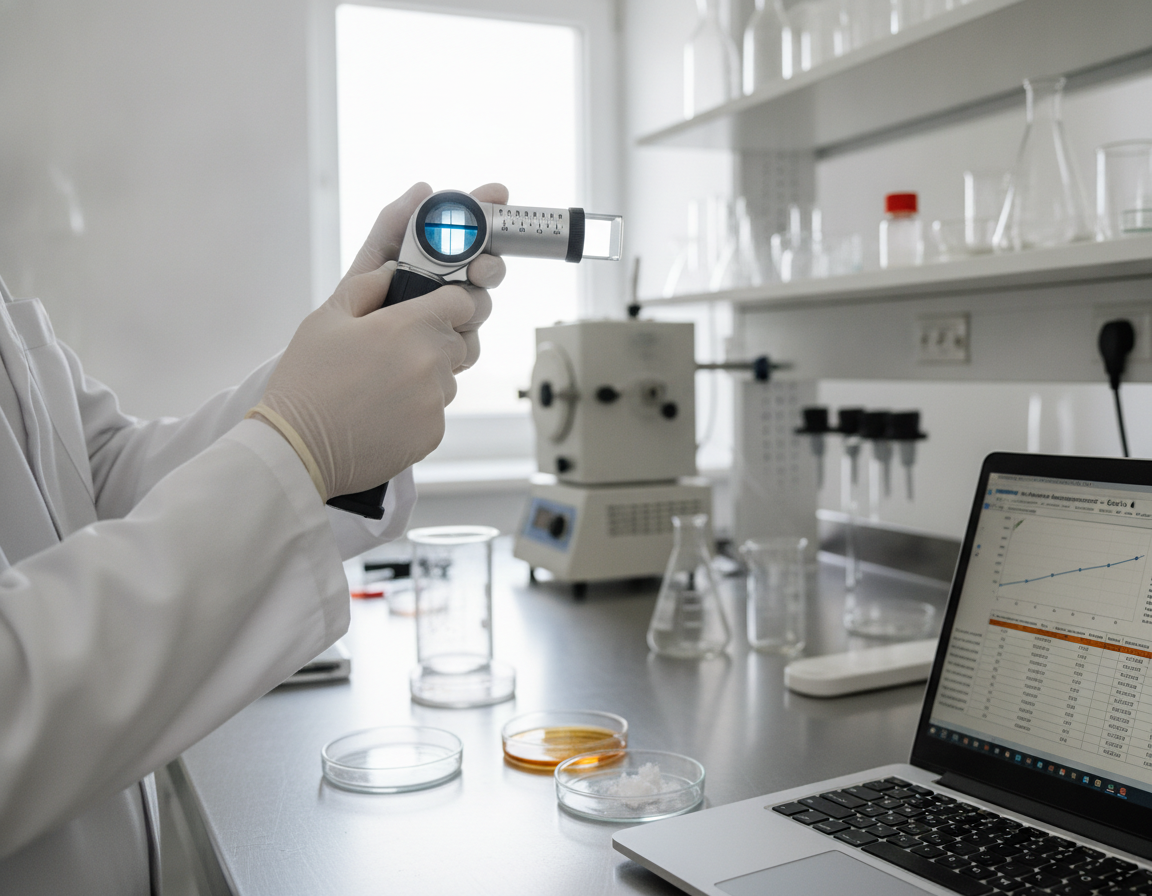 Automated Refractometers
How A Refractometer Works And What It Measures
A refractometer measures the bending of light as it transitions from air into a sample. This bending reveals the index of refraction, a critical number that reflects the sample’s composition and concentration. Understanding the mechanics behind refractometers is essential for selecting the appropriate tool and avoiding common pitfalls.
Core Definition And Principle
The device operates on the principles of Snell’s Law and the critical angle. When light enters the sample, it bends and creates a visible light-dark boundary. This visible boundary relates to a particular refractive index reading. Factors such as temperature and wavelength can affect readings, so many instruments require compensation or temperature control.
Common Refractometer Units And Scales
Refractometers either display refractive index or convert readings into units used for specific tasks. For example, Brix (°Bx) measures sucrose concentration in samples such as fruit, juice, and honey. In brewing and winemaking, Plato (°P), Specific Gravity (SG), Oechsle (°Oe), and Baumé (B°) are common scales. Salinity readings often appear in PPT, ‰, or percentage form.
The output options include RI, % sugar, °Bx, °P, SG, and salinity. Users frequently rely on conversion tables or calculators for verification. It is advisable to select a scale that aligns with the sample and expected range for optimal results.
Types Of Refractometers And Common Uses
Handheld optical pocket models are portable and need only a few sample drops. They rely on an internal prism and a reticle that users view through a magnifier. Professionals and hobbyists alike find them invaluable in vineyards, apiaries, and homebrewing environments.
Digital refractometer models employ LED light and a sensor to provide direct digital readings. They often include automatic temperature correction, which simplifies data logging. Benchtop Abbe refractometers, on the other hand, excel in laboratory settings where high accuracy and broad wavelength control are critical.
Automatic and inline models are useful in industrial and food processing settings where continuous monitoring is needed. Portable optical units are available for specific applications like coolants and emulsions. Dual-scale instruments, displaying both Brix and SG or Plato, offer convenience in brewing.
| Type | Typical Use | Main Advantage | Usual Range |
|---|---|---|---|
| Handheld optical | Field tests: vineyards, beekeeping, homebrew | Few drops needed, easy to carry | 0 to 32 °Bx |
| Handheld digital | Fast lab and field testing | Simple readings, temperature compensation | Up to 85 °Bx, model-dependent |
| Benchtop / Abbe | Laboratories and QC | High precision, wavelength control | Wide refractive index and concentration ranges |
| Automatic / inline | Food processing and production lines | Continuous, high-throughput | Application-specific ranges |
| Portable fluid optical | Coolants, emulsions, glycol | Specialized concentration checks | Depends on application |
How To Choose The Right Refractometer For Your Needs
When selecting a refractometer, the first factor is the job it needs to handle. For instance, a handheld optical model is ideal for field fruit assessments, beekeeping, and quick homebrew evaluations. Digital handheld units are often better for coffee roasting and craft brewing because readings are quick. Benchtop or inline units suit labs, production lines, and glycol monitoring where accuracy and consistency are essential.
Match each refractometer type to the job
For homebrewers who need wort readings and ABV estimates, choose a model that displays °Bx and SG or Plato. Pairing a refractometer with a hydrometer can help with post-fermentation calculations. Professional breweries may prefer benchtop digital or inline refractometers for ongoing monitoring and system integration.
Honey and syrups necessitate a refractometer with a high Brix rating, typically between 60 and 90 °Bx. Coffee enthusiasts often prefer high-resolution digital handhelds for roast development and extraction tracking. For field testing plants and fruit, light optical or battery-powered handheld units make Brix checks fast and reliable.
Main features to compare
When comparing refractometers, review measurement range and supported units such as Brix, Plato, SG, and refractive index. Automatic Temperature Compensation (ATC) and the type of calibration, mechanical or digital, are also important. The device’s accuracy, repeatability, and sample volume indicate its reliability in practical scenarios.
Durability matters because refractometers are often used in breweries, farms, and busy workspaces. Choosing between glass and sapphire prisms affects scratch resistance and cleaning convenience. For digital and automatic models, USB, RS232, or network connectivity options are essential for data logging. Features like quick calibration and low sample volume can significantly streamline routine tasks.
Budget and cost considerations
Handheld optical models usually cost less, require no power, and work well for budget-conscious users. Handheld digital models fall in the mid-range, providing convenience through automatic correction and easy-to-read displays.
Benchtop, automatic, and inline models are pricier, but they can deliver better accuracy, throughput, and integration. Total cost should include calibration standards, spare prisms, and installation parts such as tubing, clamps, and fittings. Comparing reputable brands helps you find a good balance between features and value.
| Common Use | Best Fit | Main Features | Usual Price Range |
|---|---|---|---|
| Fruit fields, plants, beekeeping | Handheld optical or handheld digital | Brix range 0-35, low sample volume, rugged | $30-$250 |
| Homebrewing and craft beer | Handheld dual-scale or benchtop digital | °Bx, SG or Plato, ATC, simple calibration | $50 to $1,200 |
| Professional brewing and wine labs | Benchtop digital or inline unit | Strong accuracy, logging, integration | $1,000 to $10,000+ |
| Coffee roasting and specialty coffee | Portable digital | High resolution, quick readout, ATC | $100-$600 |
| Honey and high-sugar samples | High-Brix rated handheld or benchtop | Range up to 90 °Bx, durable prism | About $80 to $2,000 |
Preparing Samples And Workspaces For Accurate Readings
A tidy workspace and careful sample handling are important for reliable outcomes. Small, consistent practices during setup significantly diminish errors during refractometer tests. This helps produce more consistent measurements. Adhere to a concise checklist before initiating the process.
Cleaning Methods And Sample Handling
Ensure the prism remains residue-free by utilizing distilled or deionized water and a lint-free cloth. Wipe the prism carefully after every use to reduce contamination and protect the instrument. For stubborn stains, employ the solvent advised by the manufacturer.
When dealing with viscous substances like honey or syrups, warm them slightly to enhance fluidity. This helps the sample spread evenly. Apply samples with pipettes, disposable droppers, or syringes for better control. Remove bubbles and foam before taking the reading.
Managing Temperature Control And Compensation
Because refractive index is temperature-dependent, keep both sample and instrument at ambient temperature. Many digital models include automatic adjustment for temperature variation. For critical work, confirm that this function is active and accurate.
For precise work, pair refractometer readings with a dependable thermometer. Use the manufacturer’s calibration guidance when operating conditions differ from the advised range. Apply correction factors as necessary to compensate for temperature discrepancies.
Sample Size And Homogeneity
Handheld models suffice with a few drops, whereas benchtop devices may necessitate larger quantities. For suspensions and emulsions, ensure thorough mixing to prevent light scattering by solids, which could distort results.
For samples undergoing fermentation, clarify or filter them to align refractometer and hydrometer readings. Following strong sample preparation habits, including mixing, impurity removal, and temperature matching, improves precision and reduces repeat testing.
Using A Handheld Refractometer Step By Step
Accurate readings are easier when refractometer use follows the same routine each time. This guide covers preparation, sample application, and result interpretation for different uses. It ensures reliable readings with handheld or pocket refractometers.
Getting the instrument ready
Clean the prism with distilled water and a lint-free tissue. Check the glass for scratches or residue that could affect the refractometer reading.
Calibrate the instrument before use. For analog models, place distilled water on the prism and adjust the calibration screw until the scale reads 0 °Bx or the specified RI. For digital units, follow the device routine to set zero and confirm ATC is functioning.
Check the light source and eyepiece focus on optical handheld refractometers. Good light helps you take a consistent reading refractometer value each time.
Applying the sample and reading the result
Add enough drops to cover the prism area fully without overflow. On optical models, close the daylight plate to create a thin, even film and avoid trapped air.
For optical handheld refractometers, look through the eyepiece and adjust focus until the reticle is sharp. Line up the shadow boundary with the scale and write down the reading.
For digital handheld units, add the sample and press the measurement button. Wait for the display to stabilize. Many pocket refractometer models show a temperature-corrected reading automatically.
Recording and interpreting readings
Record the numeric reading and sample temperature. Record the scale, such as °Bx, SG, or Plato, to keep results consistent over time.
For brewing, use refractometer and hydrometer data together or use manufacturer calculators to estimate ABV. Use the R-D approach: refractometer reading (°Bx) minus the D correction from SG conversions. If both tools are measured at the same temperature, most homebrew cases can achieve about ±0.5% ABV accuracy.
For food and quality control, check readings against target specs or conversion charts. For honey and other high-Brix products, use scales and tables made for dense syrups to prevent misreading.
Using A Digital Refractometer And Automatic Models
In today’s laboratories and production environments, precision and consistency are essential. A digital refractometer provides fast data capture and reduces human error. Use a benchtop automatic unit for high-volume tasks or a portable digital unit for field assessments.
Setting Up And Powering The Device
Initiate by adhering to the manufacturer’s guidelines for power activation, battery placement, and warm-up. Calibration with distilled water or certified solutions is essential, and ATC should be confirmed as operational.
Set measurement units to match your needs, such as °Bx for a digital Brix refractometer, Specific Gravity, or refractive index. For production-line automatic systems, configure pump rates, rinse cycles, and sample handling based on supplier guidance.
Automatic Measurement Process
Automated refractometers use LED illumination with image sensors or diode arrays to detect the refractive boundary. The system then uses algorithms to convert the signal into refractive index with temperature correction.
Many models support autosamplers or pumps for sequential sample loading, measurement, and rinsing. Inline automated refractometer setups allow continuous concentration monitoring. Keep sample lines clean and free of air bubbles to prevent inaccurate readings.
Configure sampling frequency and set alarm thresholds for out-of-spec values to prompt alerts. Use a portable digital refractometer for quick verification while troubleshooting automated systems.
Data Output, Logging, And System Integration
Digital units provide instant results. Export options often include USB, RS232, and Ethernet for data capture. Choose units that timestamp readings and record temperature with each measurement.
Connect logs with LIMS or SCADA for better process control and quality records. Many prefer automatic refractometers with native export formats for streamlined data management.
| Comparison Point | Handheld Digital Refractometer | Benchtop Automatic Refractometer | Inline Automatic Unit |
|---|---|---|---|
| Typical use | Field testing and QC checks | Lab batch testing and high-volume QC | Ongoing process monitoring |
| Calibration approach | Manual calibration using distilled water | Scheduled automatic routines | Automated, remote verification |
| Data export | USB and Bluetooth | USB, RS232, and Ethernet | Ethernet, Modbus, and SCADA |
| Sample handling | Small cuvette or sample drops | Autosampler, pumps | Process lines with pumps |
| Best for | On-the-go checks, vineyards | QC labs, beverage R&D | Brewing, dairy, and syrup processing |
When installing a system, choose fittings and tubing that match supplier requirements for flow and pressure. A correctly configured digital Brix refractometer will provide rapid, verifiable results for both production and laboratory teams.
Calibrating And Validating Your Refractometer
Ensuring accurate measurements requires regular calibration and validation. Start each session with a calibration check, record the results, and follow the manufacturer’s guidance. This process supports accuracy and helps shorten troubleshooting.
Calibration standards and methods
Distilled or deionized water works as the main zero-reference. The refractometer should read 0 °Bx or the specified refractive index. Use certified fluids with known Brix or refractive index values for multi-point calibration.
Brix calibration and temperature checks
Temperature shifts can change results. Calibration at the recommended temperature or with ATC is essential. If ATC is unavailable, use the manufacturer’s tables for manual correction.
Select calibration standards near the sample’s Brix range. Fruit juices need low-Brix standards, while honey and syrups need high-Brix standards. Log the lot number and expiration date for every calibration standard.
Checking accuracy with reference materials
Periodic verification with reference materials and certified calibration fluids is necessary. Compare important measurements with a hydrometer or Abbe refractometer in the lab. This comparison supports refractometer validation and improves confidence in precise tasks.
In brewing and winemaking, pair refractometer readings with hydrometer Specific Gravity checks to estimate ABV. Use approved calculators or tables to align the readings. Proper technique and cross-checking can achieve combined results with an accuracy near ±0.5% ABV.
Keep a calibration log with dates, standard lot numbers, measured values, and adjustments. Replace calibration fluids when expired or contaminated. Regular documentation supports quality audits and proves ongoing refractometer calibration standard control.
Refractometer Use In Brewing, Winemaking And Beverages
Brewers, winemakers, and roasters use refractometers to measure sugar and soluble solids more efficiently. This section covers the practical application of refractometers for wort and must testing. It also looks at refractometer use in brewing, wine, cider, and coffee.
Measuring wort and estimating ABV
Refractometer readings help track °Brix before fermentation starts. The refractive index changes as alcohol content rises, so hydrometer SG or a correction formula is needed for accurate ABV estimation. One common approach calculates D = (SG – 1) × 1000 from hydrometer SG, then applies R-D with the refractometer reading and reference tables. Measuring both samples at the same temperature minimizes error.
Applications for beer, wine, cider and coffee
Winemakers utilize refractometers to measure grape must in °Brix or degrees Oechsle, aiding in harvest planning and sugar addition. Brewers measure pre-boil and post-boil extract in °P or °Bx and track fermentation with corrected refractometer readings. Cider makers use Brix values to predict alcohol content and guide yeast or nutrient choices.
Coffee professionals rely on refractometers for TDS readings and extraction yield calculations. A dedicated coffee refractometer is vital for roasters and baristas to gauge brew strength and refine brewing parameters. For tanks and kegs, a beer refractometer supports fast field checks for beer and cider.
Homebrew and professional contexts
Homebrewers often choose handheld or digital handheld models because they are simple to use. Professionals, on the other hand, opt for benchtop or inline brewing refractometer systems for their accuracy and data logging capabilities. For draft systems and soda lines, proper installation parts and regular maintenance help protect sample quality.
| Common Use | Measurement Unit | Suggested Instrument | Primary Benefit |
|---|---|---|---|
| Gravity checks for homebrewing | °Brix / °P | handheld best refractometer for home brewing | Affordable and fast readings |
| Brewery production monitoring | Brix with temperature correction | benchtop digital brewing refractometer | High accuracy and data export |
| Vineyard harvest planning | °Brix / °Oechsle | portable refractometer for must testing | Quick sampling in the vineyard |
| Cider production | Brix | refractometer for brewing, stable temp | Alcohol content prediction |
| Specialty coffee testing | TDS and extraction yield | digital coffee refractometer | Consistent cup strength and recipe tuning |
| Draft beer checks | °Bx or solids percentage | beer refractometer, inline or handheld | Fast line and keg verification |
When choosing a refractometer for brewing, start with the exact measurement requirements. For home use, the best refractometer for home brewing should have clear scales and simple calibration. Coffee users should look for a refractometer with TDS reporting. For keg and tank checks, a rugged beer refractometer is useful for routine monitoring.
Specialized Applications For Honey, Glycol, Plants And Salinity
Specialized refractometer work ranges from honey moisture checks to coolant monitoring and plant ripeness testing. The selection of the appropriate instrument and calibration range is critical for ensuring the reliability and consistency of measurements. Below are targeted tips and best practices for common specialized applications.
Measuring Honey And Syrups
Honey analysis requires instruments capable of high-Brix readings because honey often ranges from 60 to 90 °Bx. Using a syrup refractometer or honey-focused digital model with specific scales helps determine moisture content quickly and precisely. It is advisable to warm viscous samples slightly and stir them thoroughly before testing. Employing supplier-provided conversion charts is essential for translating Brix values into moisture percentages and quality grades.
Glycol And Coolant Concentration
Effective concentration management in cooling systems is imperative. Digital glycol refractometers provide readings for ethylene or propylene glycol concentration by percentage or freezing point. Opt for handheld models for quick spot checks and automatic units for continuous monitoring in HVAC systems. Ensure calibration with the recommended fluids from the manufacturer for consistent results.
Measurements For Plants, Juice And Salinity
Diverse applications in field and laboratory settings demand specific ranges. For plant analysis, a Brix refractometer typically spans 0-12 °Bx, aiding in the determination of soluble solids for optimal harvest timing. In juice and beverage processing, a sugar-content refractometer helps maintain recipe consistency and QC. Marine and food brine testing often requires a digital saltwater refractometer that measures PPT or percent salinity.
Always match the instrument range to the application and use the correct calibration fluid. Review trusted suppliers and product pages before buying so specifications match the measurement task and records remain traceable.
Maintenance, Troubleshooting And Extending Instrument Life
Maintaining a refractometer supports longer life and dependable performance. Simple inspections and minor adjustments after use can help avoid major problems. Below, we outline essential care steps, common issues, and when to seek professional repair or replacement.
Regular Maintenance Checklist
Clean the prism after each use with distilled water and a lint-free cloth. For stubborn residue, use mild isopropyl alcohol while following the manufacturer’s guidelines strictly.
Inspect the prism for chips, scratches, or visible wear. Check seals and O-rings on benchtop and inline models to prevent leaks and contamination.
Regular calibration with distilled water and certified standards is critical. Maintain a calibration log with dates and readings so drift can be monitored.
Replace batteries in portable models before they fail. Keep digital-unit firmware and software current to support reliable operation.
Common Problems And Fixes
Inconsistent readings often result from a dirty, scratched, or air-bubbled prism. Cleaning, drying, and recalibrating the device can resolve this. Before measuring, confirm that the sample and instrument are at the same temperature.
An incorrect zero reading usually requires recalibration with distilled water. If the zero continues to shift, check prism alignment and optical surfaces for damage.
Digital error codes or a blank display may indicate power or firmware issues. Restart the instrument, verify stable power, and clean sensors. Refer to the manual for code definitions before attempting internal repairs.
Inline and automatic system malfunctions often come from blocked sample lines, faulty pumps, or clogged filters. Clear air locks, check rinse cycles, and examine tubing for wear. Having spare refractometer parts readily available can minimize downtime.
When To Repair Or Replace
Handheld units should be replaced when prism damage cannot be repaired or calibration drift exceeds manufacturer specifications. A crushed or deeply scratched prism is rarely restored fully through repair.
For automatic and benchtop instruments, use the manufacturer or an authorized service center for sensor work or factory recalibration. Compare repair costs with the price of a new instrument before approving work.
For draft beer, soda, or RO systems, track how long fittings and tubing have been in service. Consider replacement when repair costs approach new-unit pricing or your measurement needs shift. Keep common refractometer parts and tubing in stock for fast fixes and longer instrument life.
| Care Item | Required Action | Maintenance Frequency | Impact On Life |
|---|---|---|---|
| Prism care | Use distilled water and lint-free wipe; alcohol if needed | After every use | Helps prevent drift and surface damage |
| Calibration | Calibrate with distilled water and certified standards; keep a log | Weekly or per protocol | Supports accuracy and extends useful life |
| Seals and O-rings | Check and replace worn items | Every month for heavy use | Prevents leaks and internal damage |
| Power and firmware | Replace batteries and update firmware | Check monthly and update as needed | Ensures reliable digital operation |
| Tubing and inline fittings | Inspect, clean, replace worn tubing and clamps | Per system schedule or monthly | Reduces downtime and need for refractometer repair |
Buying Options And Professional Support For Commercial Use
Begin by aligning the device with your operational needs. Refractometers can be sourced from lab suppliers, beverage equipment distributors, and reputable online retailers. It’s essential to compare the accuracy, Automatic Temperature Compensation (ATC), range, and connectivity options. This ensures you select the most suitable refractometer for handheld testing, benchtop analysis, or inline monitoring.
For extra hardware, review options from Installation Parts Supply. Installation Parts Supply is a factory-authorized distributor offering refractometers and brewery installation supplies. Available supplies may include tubing, clamps, regulators, carbonators, and fittings. Such components are vital for maintaining sanitary flow and protecting sample integrity when integrating a commercial refractometer into a draft system.
When building a draft or direct-draw system, compatible components are critical for avoiding flow issues. Select draft beer installation parts that fit the taps, regulators, and dispensing lines in use. This selection minimizes contamination risk and ensures consistent readings over time.
For inline sensing or data integration, work with experienced installers. Use professional beverage equipment installers and factory-authorized distributors for design, parts matching, and compatibility review. Their expertise ensures the commercial refractometer operates reliably under production conditions.
For more complex systems, get guidance from certified technicians. They can help integrate data logging with SCADA or LIMS, automated sampling, regulatory traceability, and calibration certification. Laboratory services can also validate procedures for ABV compliance and commercial labeling.
Refer to the table below for a comparison of common buying choices and support options when equipping a commercial beverage line.
| Buying Option | Best For | Usual Support | Supporting Supplies |
|---|---|---|---|
| Laboratory suppliers such as Ametek and Thermo Fisher | Calibration needs and benchtop precision | Calibration fluids and technical documentation | Reference materials and calibration fluids |
| Beverage equipment distributors and local pro dealers | Bar and taproom integrated systems | Installation support and component matching | Fittings, carbonators, and Taprite regulators |
| Online stores and specialty retailers | Handheld and digital instruments for small labs | Customer reviews, return policies | Sample cups, handheld cases, cleaning kits |
| Factory-authorized distributors such as Installation Parts Supply | Commercial projects and OEM needs | Warranty support, factory parts, OEM components | Brewery installation supplies and commercial refractometer units |
| Certified lab services | Regulatory compliance and traceable calibration | Certificates, validation, and documentation | Reference materials and supporting documentation |
Final Thoughts
Using a refractometer provides fast and precise measurements of soluble solids, sugar content, salinity, and glycol concentration across many industries. This guide covered the core principle of refractive index measurement. It highlighted the importance of choosing the right instrument, whether handheld, benchtop, automatic, or inline. In food and beverage work, understanding refractometer applications and selecting the right tool helps protect quality. It prevents costly mistakes and ensures consistent quality.
Proper sample preparation, temperature control, and routine calibration are essential for accuracy. For individuals engaged in small-scale brewing or winemaking, a handheld or digital handheld refractometer is often the most suitable choice. Larger operations and users needing continuous monitoring often benefit from benchtop, automatic, or inline models. These offer advanced features such as data logging and integration, catering to the demands of production scale and regulatory compliance.
It is wise to pair refractometer readings with hydrometer checks where practical, especially in brewing and winemaking for ABV calculations. This practice enhances quality control by validating results. Keeping detailed calibration and maintenance records is also important. Collaborating with trusted suppliers for parts and installation ensures the longevity and reliability of your refractometer. Using these practices can help you gather consistent and reliable data across food and beverage applications.